
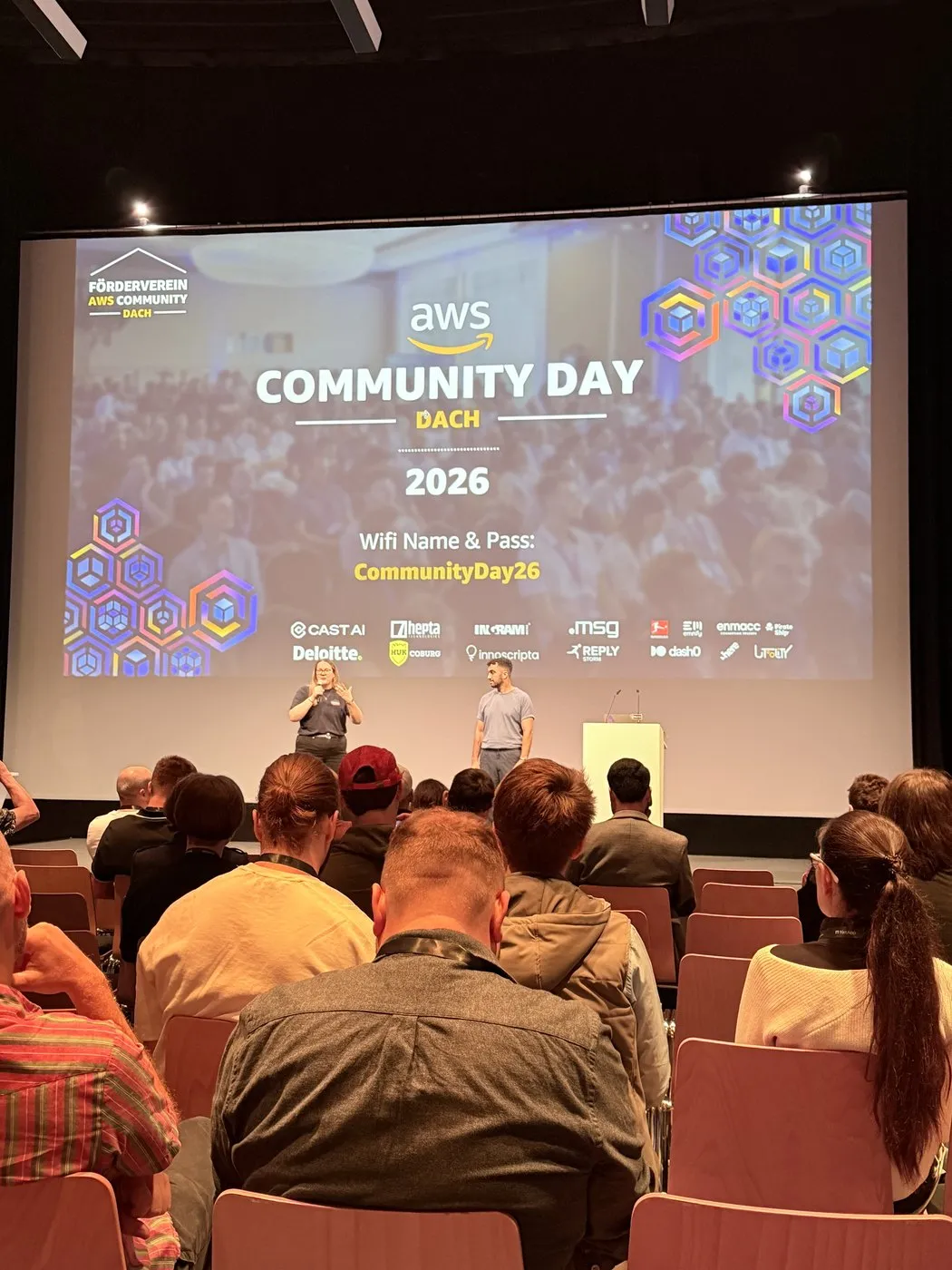
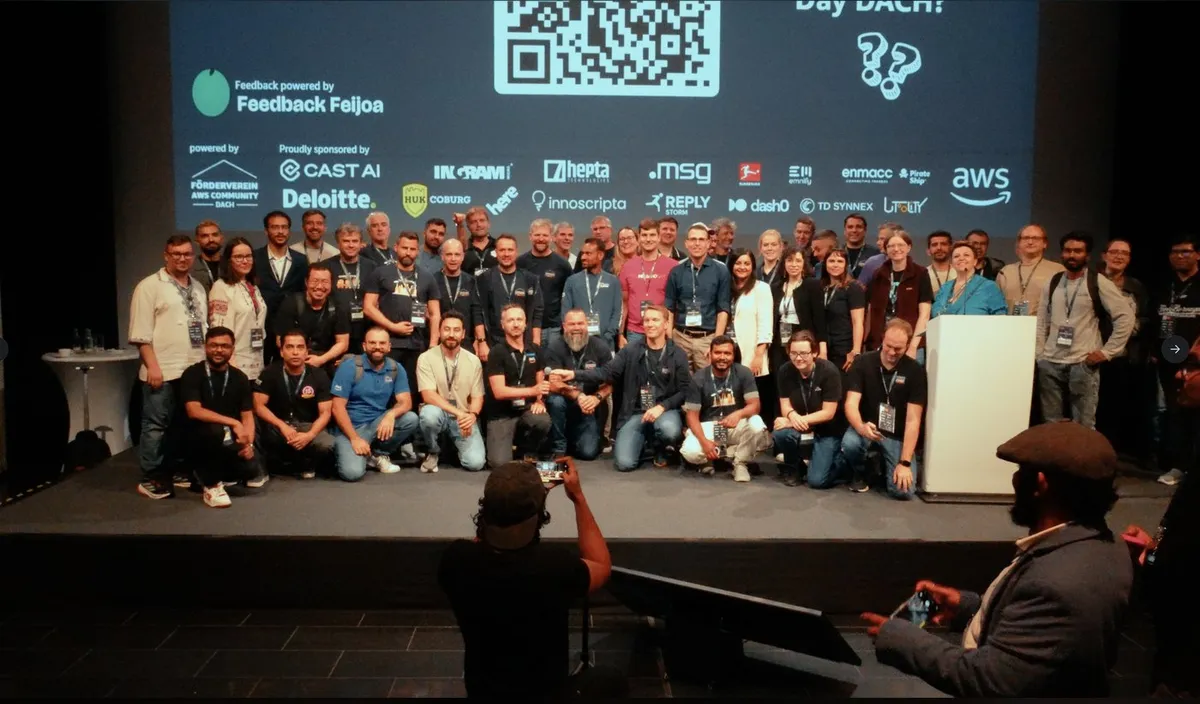
Six hundred people in one Berlin venue, more than ten AWS Heroes and a great many AWS Community Builders among them, and September sunshine outside that nobody had ordered. That was AWS Community Day DACH on September 15th, my third time attending and my second time speaking there. Most conference write-ups list sessions and takeaways and skip the part that actually stays with you.
In this post you will learn what AWS Community Day DACH is, why cutting conference travel because AI can teach you everything is a mistake, which sessions stayed with me, and what I shared on stage about adopting agentic AI safely inside a large organization.
Why Fewer Companies Are Sending People to Conferences
Something has shifted over the past couple of years, and I keep hearing the same story from the people I meet. Fewer companies are sending their engineers to conferences, and the reasoning sounds sensible, because an AI assistant can explain any topic on demand. If learning were the only thing a conference provided, that budget line would be hard to defend.
That reasoning is wrong. AI can teach you a topic, but it cannot introduce you to the person who solved your exact problem last quarter, turn a coffee queue into a joint project, or produce the conversation that ends in a new collaboration or a signed deal. Sponsors know this too, because a booth reaches a target audience that is genuinely hard to reach through digital channels. That is also why it is worth explaining what this particular event is.
What Is AWS Community Day DACH?
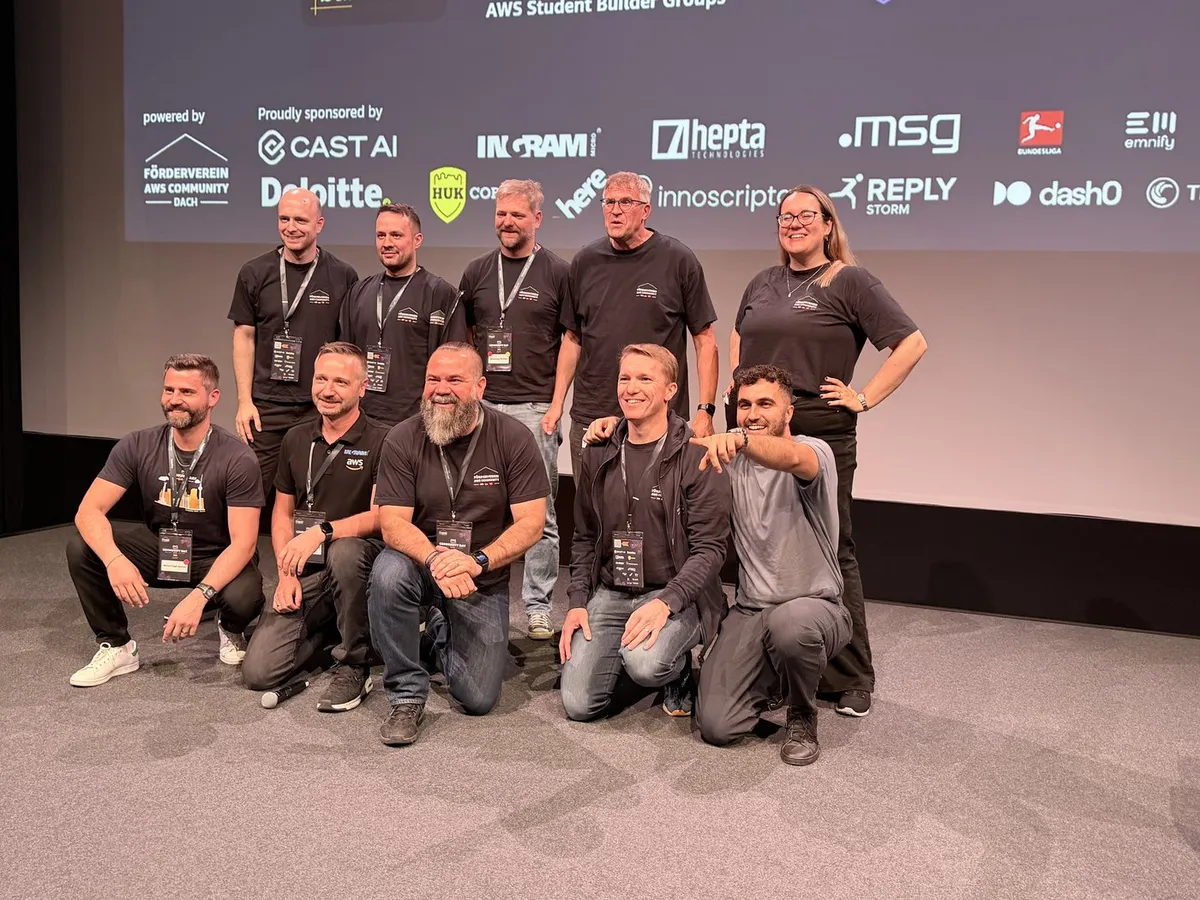
AWS Community Day DACH is a community-run conference for the German-speaking AWS ecosystem, organized by Förderverein AWS Community DACH e.V., the association behind the user group leaders, AWS Heroes, and AWS Community Builders across Germany, Austria, and Switzerland. It is volunteer work from start to finish, which makes this year's scale impressive, with more than 600 attendees and over ten AWS Heroes in the building. The full agenda is on the official site.
The AWS Community Connections That Outlast the Event
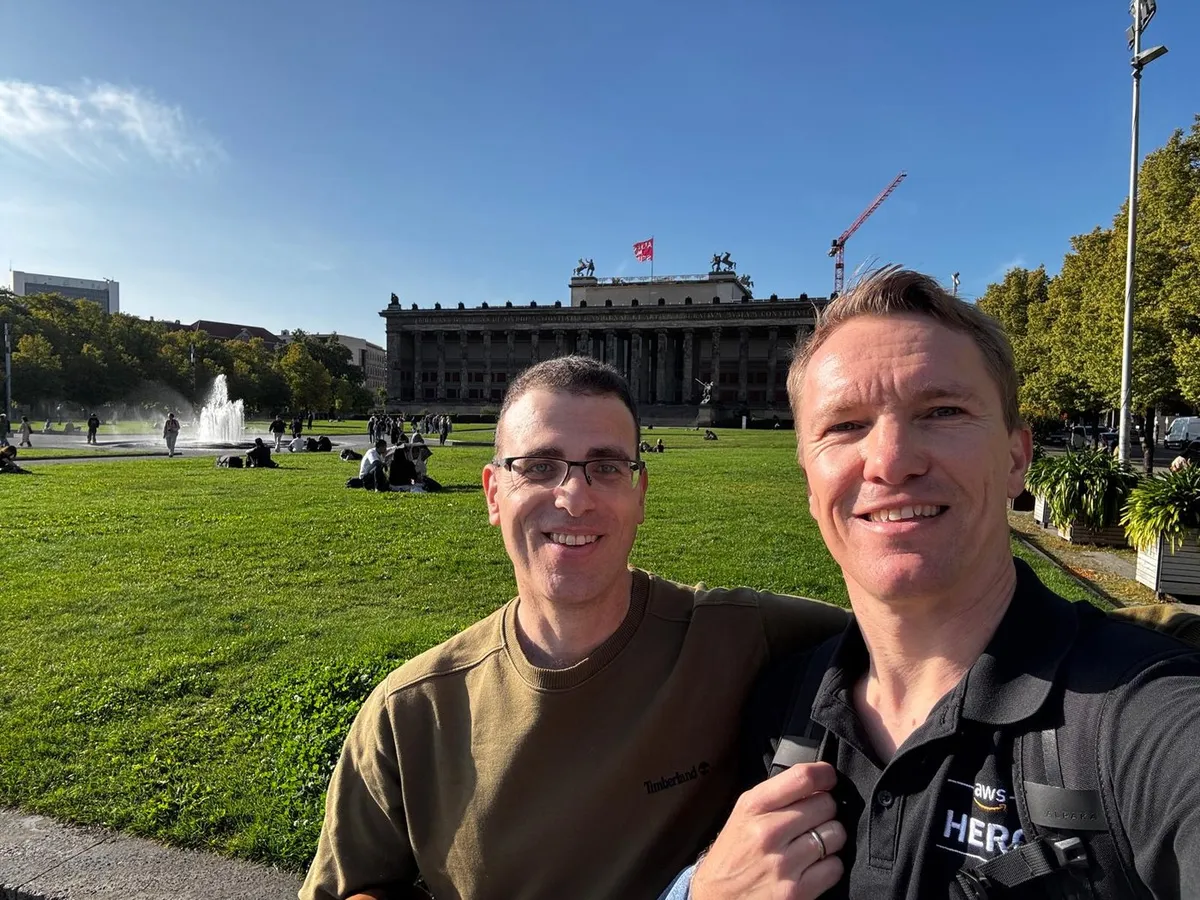
Several years ago, at this same conference, I met a group of German AWS Heroes, among them Johannes Koch and Raphael Manke, and what began as a hallway conversation turned into genuine friendship. Both were busy again this year, with Johannes running the Community Builder Meetup and Raphael presenting on observable agents with Gunnar Grosch. We now run into each other at conferences all over the world and outside of them too, which turns an annual event into something closer to a reunion, and those friendships have produced podcast episodes, joint projects, and a long list of good evenings that never appeared on any agenda.
The Hallway Track Is the Real Agenda
Between sessions I talked with people from all over Europe about my session, the open source projects I maintain, what they are building at their own companies, and life in general. Some conversations were deeply technical and some were not, and the mix is the point, because that is what community means in practice, a room where you can ask a hard architecture question and share a beer with the same person an hour later.
Agentic AI Sessions That Stayed With Me
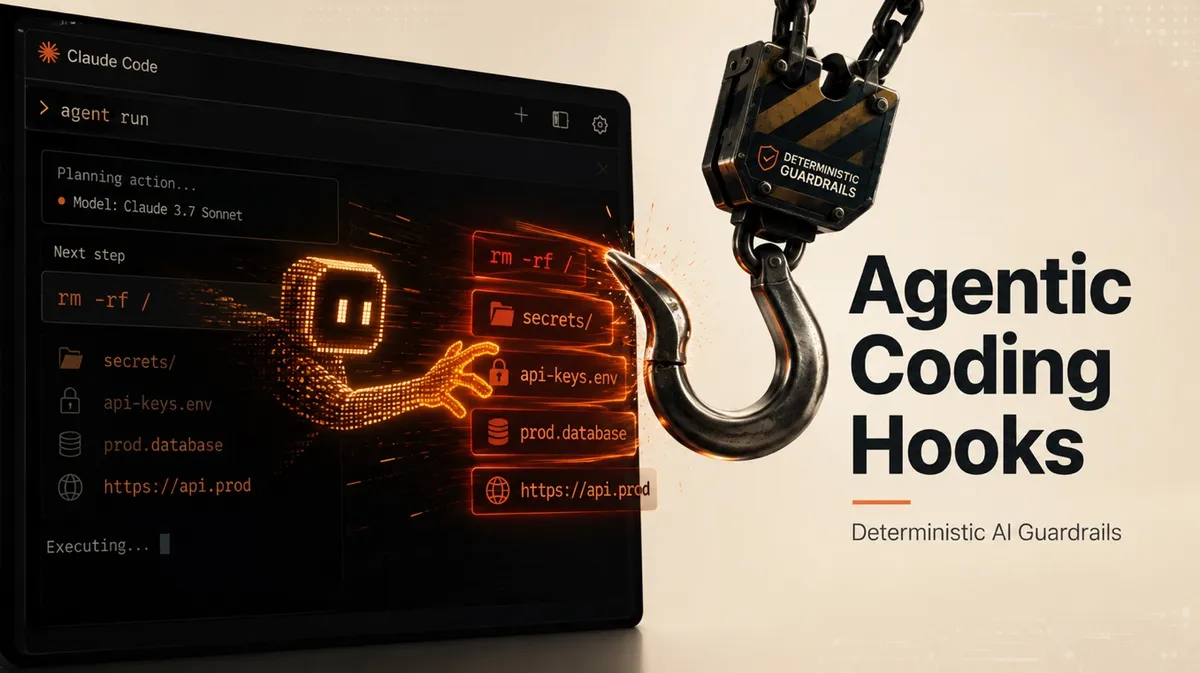
Agentic AI was the dominant theme of the day, and three sessions in particular stayed with me. Anton Babenko's "The Terraform Trust Gap" worked through what happens when agents write infrastructure as code, and his insights on AI guardrails were spot on. He replaced a README with a real contract so the hallucinated configuration disappeared, turned a module example into a fixture that fails the moment it drifts, and let the agent plan changes while a human approved the plan before anything could be applied. The part about hooks resonated most, because deterministic guardrails are exactly what I wrote about in Agentic Coding Hooks: Deterministic AI Guardrails, and watching an agent get blocked live on stage beats any diagram.
Christian Bonzelet's "Every Builder Ships: Scaling Agentic Engineering with Kiro at the Bundesliga" hit even closer to home. He walked through the different agent personas his team runs with Kiro and the AI-driven SDLC workflow around them, and he was open about both the insights and the challenges along the way. All of it resonated strongly with what we are building at Palo Alto Networks and with what I described in AI-Driven SDLC. Watching another team reach the same conclusions from a completely different starting point is both reassuring and a little humbling.
The session Raphael Manke and Gunnar Grosch gave on observable agents went deeper into Lambda Durable Functions and OpenTelemetry than anything else I saw that day, working through why standard observability falls apart when a single durable execution spans several specialist agents, and how to get one coherent trace across all of it. I can testify that I walked out having learned a thing or two.
My Session: AI Did Not Wait for Your Security Review
My own session covered agentic AI adoption and security in organizations. Developers are already using coding assistants, agentic skills, and MCP servers to write, review, and ship code, in most companies without shared security standards or any governance. In a large organization that becomes tool sprawl, with multiple IDEs, many agents, inconsistent rules, and rising risk that nobody owns. The instinctive reaction is to block AI tools entirely, and that fails fast, because developers work around the block, security loses visibility, delivery slows, and risk grows. I argued for treating AI as a first-class platform citizen instead, applying platform engineering principles to build centralized MCP guardrails, a curated agentic skills catalog, and reusable agentic blueprints, backed by AI SDLC frameworks that govern AI usage while accelerating delivery. The written version of the argument is in AI Didn't Wait for Security. Now What?.
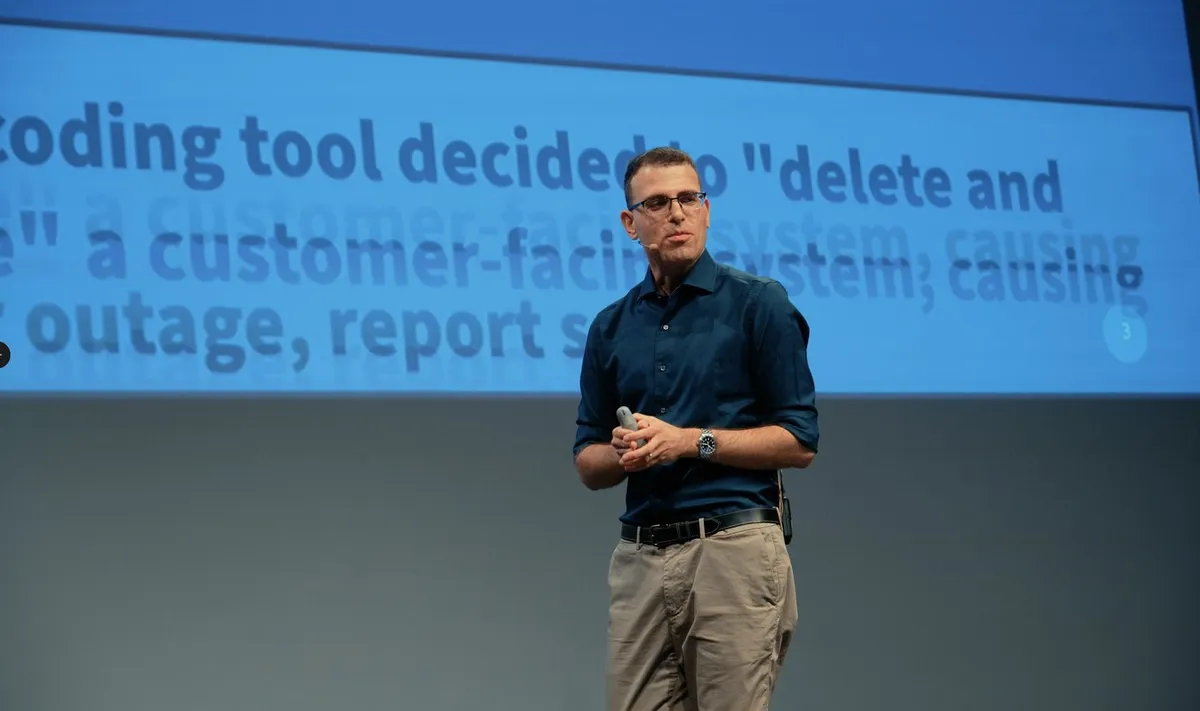
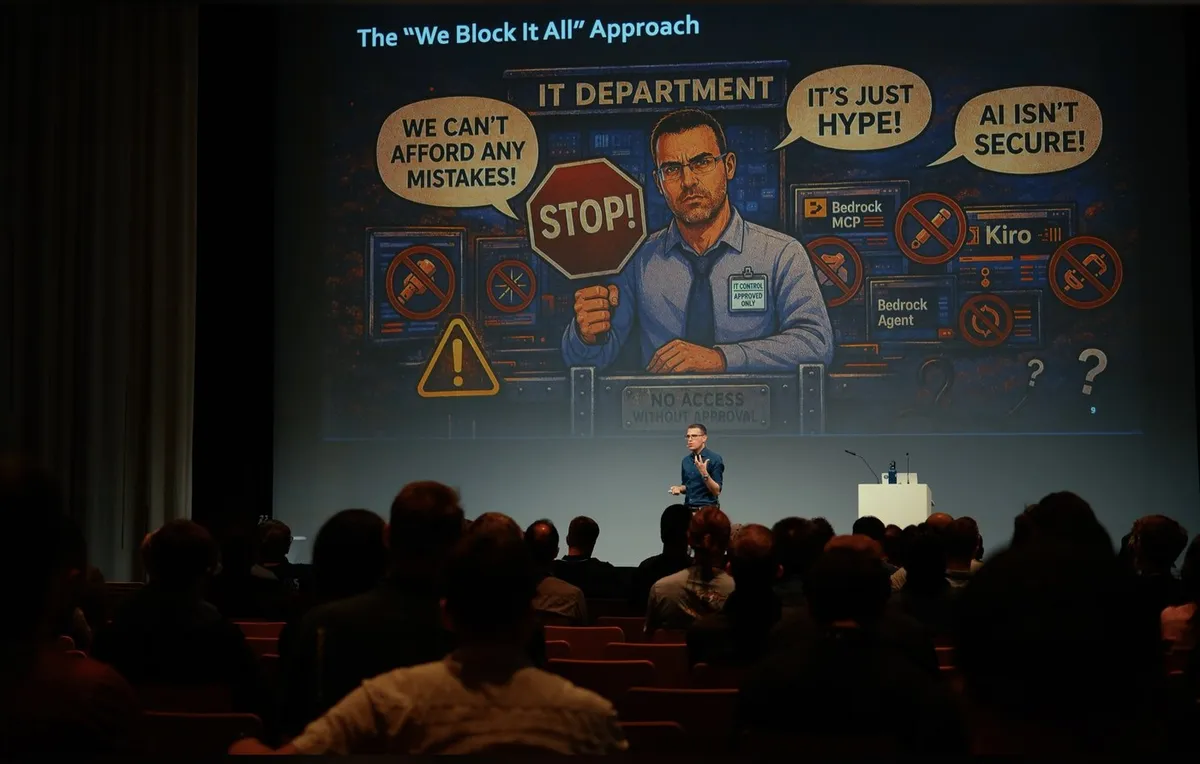
The Berlin talk was the shortened version of COM401, the session I am presenting with Stav Ochakovski at AWS re:Invent, where we have the room for the full architecture. If you are heading there, my guide to AWS re:Invent has the practical tips I wish someone had given me on my first visit.
Summary: See You in the Frankfurt Area Next Year
Berlin gave us excellent weather, the organizers gave us an excellent conference, and the community gave me the reason to book the flight. If you want to learn things that are not yet in the documentation and meet people who will still be in your life years from now, AWS Community Day DACH is one of the best places in Europe to do both. The next edition moves to the Frankfurt area, and I recommend putting it on your calendar.